
Must-Have Equipment for Starting Your Own Workshop at Home
Are you considering taking your DIY hobby to the next level? If you’re setting aside a space for your tools and equipment, it’s important to know what you have already and what you need to get. Whether you decide to transform your garage or basement into a workshop, getting kitted out at this stage will ensure you’re organised.
The rise of DIY
Research by American Express in 2023 revealed that Brits were set to spend £38.7 billion on DIY. That’s an average of £1,380 per adult. This may be unsurprising, given the changes we’ve seen in recent years.
Since the pandemic, more of us are working from home, with the hybrid workplace/ home-based split an enduring legacy of the lockdowns. With us having more time in our flats and houses to spot uneven surfaces and broken light fittings, we’re seeing opportunities to make updates.
As many of us become well-versed in DIY projects, it makes sense to create a space filled with tools. Here are some of the basics you’ll need if you want to create an at-home workshop:
- Workbench
A sturdy workbench is the central fixture where you’ll do a lot of work on your projects. When choosing a workbench, consider its size, stability, and storage options. For smaller spaces, invest in a foldable workbench.
- Power tools and protection
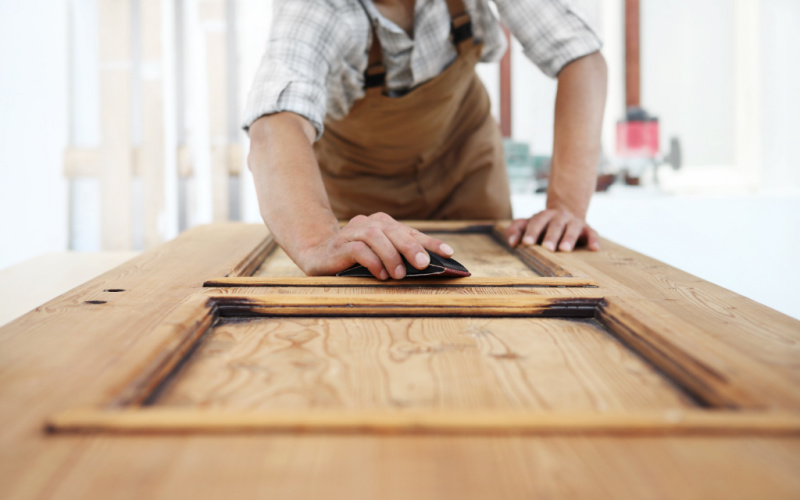
Power tools save time and make tough jobs more manageable. You’ll need to have some of the essentials such as a drill, jigsaw,circular saw andsander. You might add to this lineup over time as there are different tools that fit different tasks.
Safety is also vital. Consider personal protective equipment (PPE), such as ear defenders to guard against noise-induced hearing loss, safety goggles to protect your eyes from debris, and gloves.
- Hand tools
As well as power tools, you’ll need hand tools. You might already have some of these, but the key elements include a claw hammer, screwdriver set, pliers, and tape measure. A utility knife is also handy for cutting materials like cardboard, plastic, and leather.
- Benchtop tools
For more advanced projects, benchtop tools can enhance your workshop’s capabilities. These tools require dedicated space, but they offer precision and efficiency for complex tasks. The most common include a table saw, compound mitre saw and bench grinder, which is essential for sharpening tools, shaping metal, and polishing surfaces.
These benchtop tools provide the versatility needed for more intricate and large-scale projects, making them useful additions to your workshop.
If you’re planning out your at-home workshop, take the time to create a checklist. What do you have already? What tools will you need? By getting organised now, you’ll be ready for any project later on.